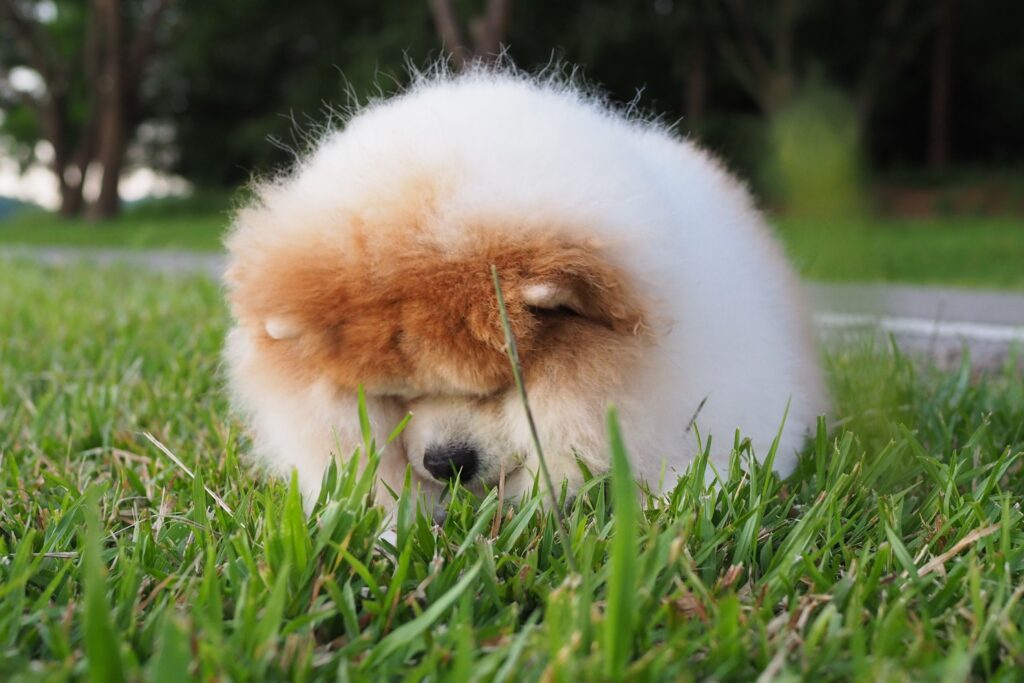
If you’ve ever seen your dog nibbling grass in the garden or grabbing a mouthful while out on a walk, you’ve probably wondered: why do dogs eat grass?
It’s a very common behaviour in dogs, and in most cases it is completely normal. While it can look a little odd (and sometimes a bit unpleasant), grass eating is not usually anything to worry about. That said, there are times when it may be linked to an underlying issue.
In this article, we’ll look at the most common reasons dogs eat grass, when you should be concerned, and what you can do to help.
1. Boredom Or Anxiety
Sometimes grass eating is more about behaviour than health.
Dogs that are bored, under stimulated or feeling anxious may chew grass simply because it is there. It can become a habit, especially if they spend long periods alone in the garden or are not getting enough stimulation on walks.
Signs this may be the cause:
- Grass eating happens mostly during quieter periods
- Your dog looks for attention afterwards
- They show other boredom behaviours, such as digging or excessive barking
More exercise, enrichment toys and mental stimulation can all help keep your dog engaged and reduce boredom related behaviours.
2. They Simply Like The Taste
Some dogs simply enjoy the taste and texture of grass, especially in spring when it is fresh and tender. Not all dogs that eat grass will vomit afterwards. In fact, many dogs digest small amounts without any problems.
If your dog eats grass calmly, does not vomit and seems otherwise well, it is usually harmless.
3. Attention Seeking Behaviour
Dogs are quick to learn what gets a reaction.
If your dog notices that eating grass gets your attention, they may repeat the behaviour because they associate it with interaction. Even rushing over or calling their name can reinforce it.
If you catch your dog eating grass, try to stay calm and avoid making a fuss. Instead, gently redirect them with a training cue or distract them with something more rewarding.
4. They May Need Fibre Or A Diet Change
In some cases, grass eating may be linked to your dog’s diet.
Dogs that are lacking certain nutrients, especially fibre, may turn to grass as a natural source. Fibre plays an important role in digestion and stool quality, so a low fibre diet may be one reason your dog seeks it out.
It can also be linked to a food sensitivity or allergy developing over time. Like people, dogs are not always born with allergies, and these can appear later, causing irritation or digestive upset.
If you think your dog’s food may be contributing, whether because of a lack of fibre or a possible allergy, it is best to speak to your vet. They can help you decide whether a diet change is needed.
5. Digestive Upset Or Nausea
A common theory is that dogs eat grass when they have an upset stomach.
If your dog is feeling sick or uncomfortable, they may eat grass in an attempt to settle their stomach. This could be caused by illness, a blockage, or something in their diet not agreeing with them.
Some dogs do vomit after eating grass, and in some cases they may be trying to bring something up. However, research suggests that most dogs are not unwell before they eat grass.
If your dog:
- Eats grass frantically
- Vomits repeatedly
- Seems lethargic
- Has diarrhoea
When should you be concerned?
Grass eating is usually normal, but you should speak to your vet if:
- Vomiting happens frequently
- There is blood in vomit or stool
- Your dog seems in pain
- Their appetite decreases
- Their behaviour changes suddenly
It is also important to ensure that the grass your dog has access to has not been treated with pesticides, herbicides or fertilisers, as these can be highly toxic.