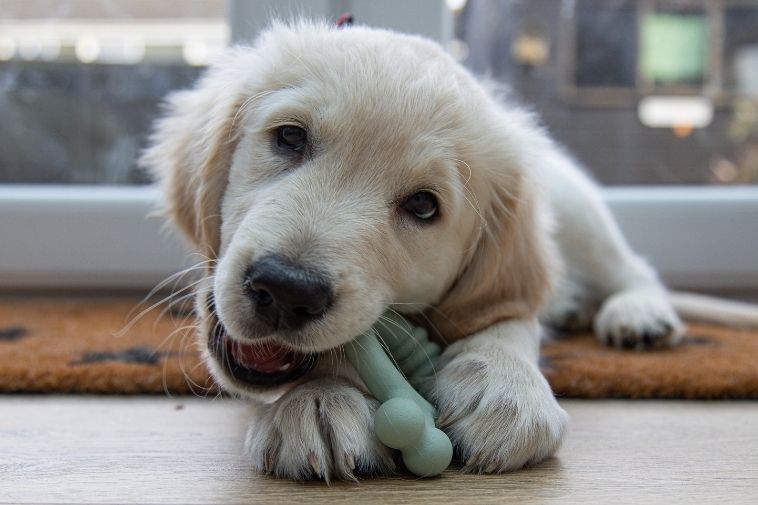
A practical guide to when puppy teething usually starts, what’s normal, and how to make the stage a little easier for both of you.
Puppy teething is one of those stages that can feel relentless when you are in the thick of it. One day your puppy is pottering about happily, the next they are chewing the rug, mouthing your sleeves and testing anything they can reach. The good news is that it is normal. In most cases, the main teething stage happens between around three and seven months, with adult teeth usually through by about six months.
When do puppies start teething?
Most owners notice teething from around three to four months old, when baby teeth begin to loosen and the adult teeth start to come through. That is often the point when chewing suddenly ramps up.
What many people don’t realise is that the first stage has already happened before their puppy even comes home. Baby teeth come through in the first few weeks of life, so the stage owners tend to notice most is the changeover from milk teeth to adult teeth.
Why teething often feels so intense
The most obvious sign is chewing. Your puppy may suddenly seem interested in table legs, skirting boards, slippers, blankets and hands. Mouthing and play biting are common too.
Chewing is natural, and puppies explore the world around them by putting things in their mouths, so some mouthing is completely normal. When their gums are sore, that natural urge to chew often becomes much stronger.
It is also worth remembering that not every bitey moment is purely down to teething. Puppies also mouth when they are playing, exploring, over excited, hungry, bored or overtired.
What is normal during puppy teething?
A lot of chewing is normal. Some puppies may also have slightly red gums, chew for longer periods, or leave a tiny amount of blood on a toy as teeth loosen and fall out. You might even find the odd baby tooth on the floor, although many puppies simply swallow them without anyone noticing.
Chewing does not always stop the moment teething ends either. Some young dogs carry on chewing more than expected for a while afterwards, partly because they are still maturing and partly because chewing is a natural dog behaviour in its own right.
How to help a teething puppy
The aim is not to stop chewing altogether. The aim is to help your puppy learn what they can chew and to make those choices easier.
If your puppy starts mouthing your hands or goes for furniture, calmly redirect them onto something suitable instead, such as a Nylabone. Do not tell them off for chewing; clear, calm redirection is far more useful than making them anxious or confused.
Management matters as well. Shoes left by the door, children’s toys, chargers, blanket corners and anything else tempting at puppy height may need to be moved for a while. That will not stop teething, but it will make the stage easier to manage.
It is also worth looking at the bigger picture. Puppies need enough rest, regular meals, chances to explore and the right amount of mental and physical stimulation for their age. A tired, frustrated or under stimulated puppy is often much more likely to mouth and chew.
Some puppies also find cold items soothing. A chilled or puppy safe teething item can help take the edge off sore gums.
When to speak to your vet
Teething is normal, but there are times when it is sensible to get your vet involved. If your puppy seems very uncomfortable, does not want to eat, has a broken tooth, has swelling around the mouth, or still has baby teeth in place while the adult teeth are coming through, it is worth booking an appointment.
Retained baby teeth can lead to overcrowding and other dental problems, so they are not something to ignore.
The main thing to remember
Puppy teething can feel full on when you are in the middle of it, especially if your puppy seems to be chewing everything they can reach. But it is a normal stage, and in most cases the worst of it sits between three and seven months. A bit of patience, sensible management and realistic expectations go a long way. Your puppy is not trying to be difficult. They are simply growing up and working through a very normal part of development.
Sources
• Blue Cross: How to control my dog’s chewing
• Blue Cross: Puppy biting and mouthing
• PDSA: Dental disease in dogs
• Dogs Trust: How to stop your dog chewing and mouthing
• Petplan: First year milestones for your new puppy